
Introduction: Becoming a Student of Excellence in the Automotive Industry
It’s my mission to inspire you to become a student of excellence. I’ve dedicated my life to car sales training and we also want you to be a student of your industry. I love selling cars. I think this is America’s best kept career secret. And I believe if you’re in it, be in it to win it. Become a student.
Today, I’m writing about something that I think is pretty obvious when you look at it, but many car dealers maybe haven’t thought about it in these terms, so it gets overlooked at a lot of highly successful car dealerships. I believe this hurts our sales teams, turns off potential customers, costs us car deals day after day and has harmed the reputation of the auto industry.
The Three Factors Driving Dealership Results
There are three main factors driving your dealership’s results.
I want to take you through these one at a time.
Market Conditions: The Red Factor
The first one, of course, is the market condition. This is in red on the graphic because this is something you cannot control and you cannot influence. Market conditions, the economy, demand, supply, even your brand and location, they all affect volume. They even affect gross PVR, or profit per vehicle retailed.
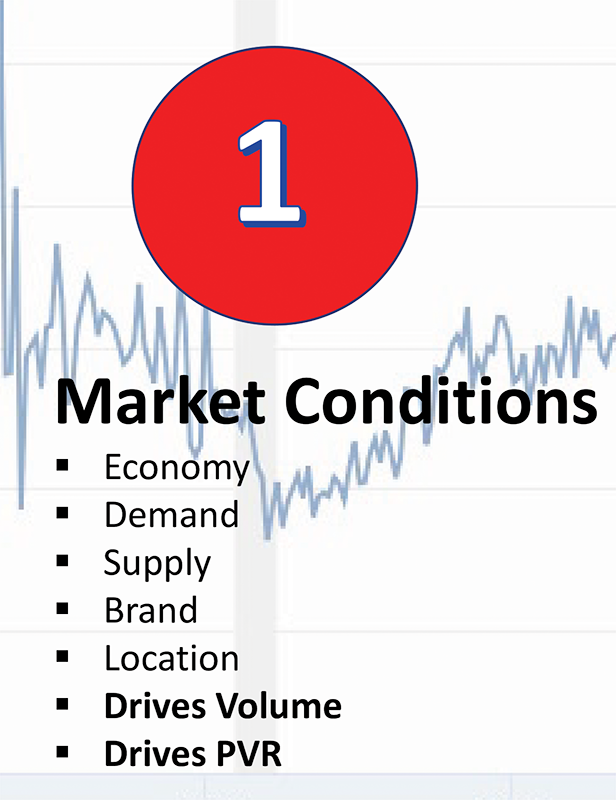
Let me give you an example.
This is an example of the law of supply and demand… During the COVID shortage, During the global shortage, what happened? Supply of cars went down, prices, profits went up, and so did commissions. This happened to everyone I’ve talked to in the auto industry, which is hundreds.
We changed nothing but started making more on each car, simply driven by the market. Now you know what? You can’t change the market, but you can capitalize on any market.
As an example, the dealerships that focused on customer experience during the depths of the shortage were still able to reap those windfall profits, but they also won more customers on the phone who placed orders for hard to find cars simply because they engaged with the buyer’s wants and needs.
We all know stories of customers who weren’t treated this way, but bought anyway and now they bad mouth our business and most have no intention of being life long clients.
Also, when buyers came in, or called on rare, difficult to replace vehicles, it was still common for them to ask for discounts.
Untrained sales people entered those conversations saying things like “that’s the price. If you don’t take it, I’ve got 5 more customers who will”. That might horrify you now, as it horrified me and my team at the time, but we heard it so many times.
Many of the dealers I talk to know that while their people made the sale frequently during the shortage-driven boom time, few salespeople won the client for the long term. And many buyers online are saying bad things about the industry and even specific businesses because of their buying experience during the sellers market.
Building Relationships During The Shortage
Our best students, the ones who truly engaged with our training material and sought to become better and advance their careers, had entirely different conversations on the phone and in person with these buyers.
Our Dealership Playbook students took advantage of the training and development they received to put relationships first, so even as they charged market rates, and almost never discounted vehicles they sold, their customers were left feeling cared for.
Our students learned to sell more cars simply by being better over the phone, email and in person. Because they know everyone who calls about a specific car that may not be in stock, isn’t a car sales lead – they’re a buyer.
It’s a small shift in thinking that changes everything. Instead of brushing off calls or emails when the first thing they ask for isn’t available, they generate more sales by engaging in the buyer’s interests and finding the right opportunity to make the sale.
Even new salespeople can become experts pretty quickly with the right sales training!
Like a valued member of the family, our students create lifelong relationships with their buyers to become what we call Excited, Loyal, Lifetime customers (ELLC).
ELLC’s are the ones who come back again and again for their car purchases and automotive service. They refer friends, family, and co-workers.
And that’s what Automotive Sales Coach training is all about. We’d love to show you how to do that.
Dealership Systems: The Obvious Solution
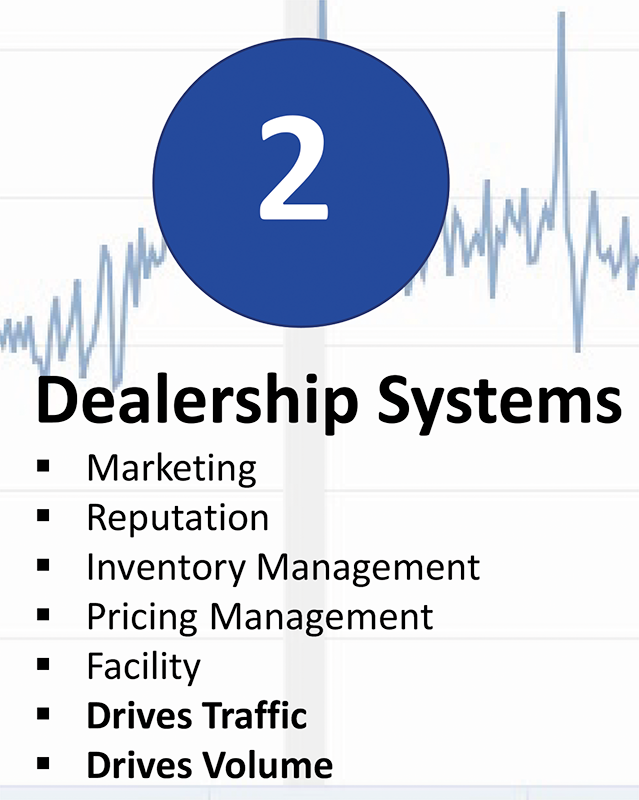
The second factor driving results is dealership systems. We have control over factors two and three. We certainly control dealership systems. Typically, these are at the leadership level.
There’s things like the facility, reputation, marketing, digital marketing, whatever marketing we do to drive traffic, inventory management, pricing management, these are huge today in increasing online and physical traffic to the business and many groups are able to dominate the competition with a focus on superior dealership systems.
Of course, increased traffic drives results. True or false? So we control that just as our inventory and pricing management can drive the purchase. Typically, these systems are put in place by the management team and employees that carry out those systems in terms of processes.
Sales Systems: The Deciding Factor
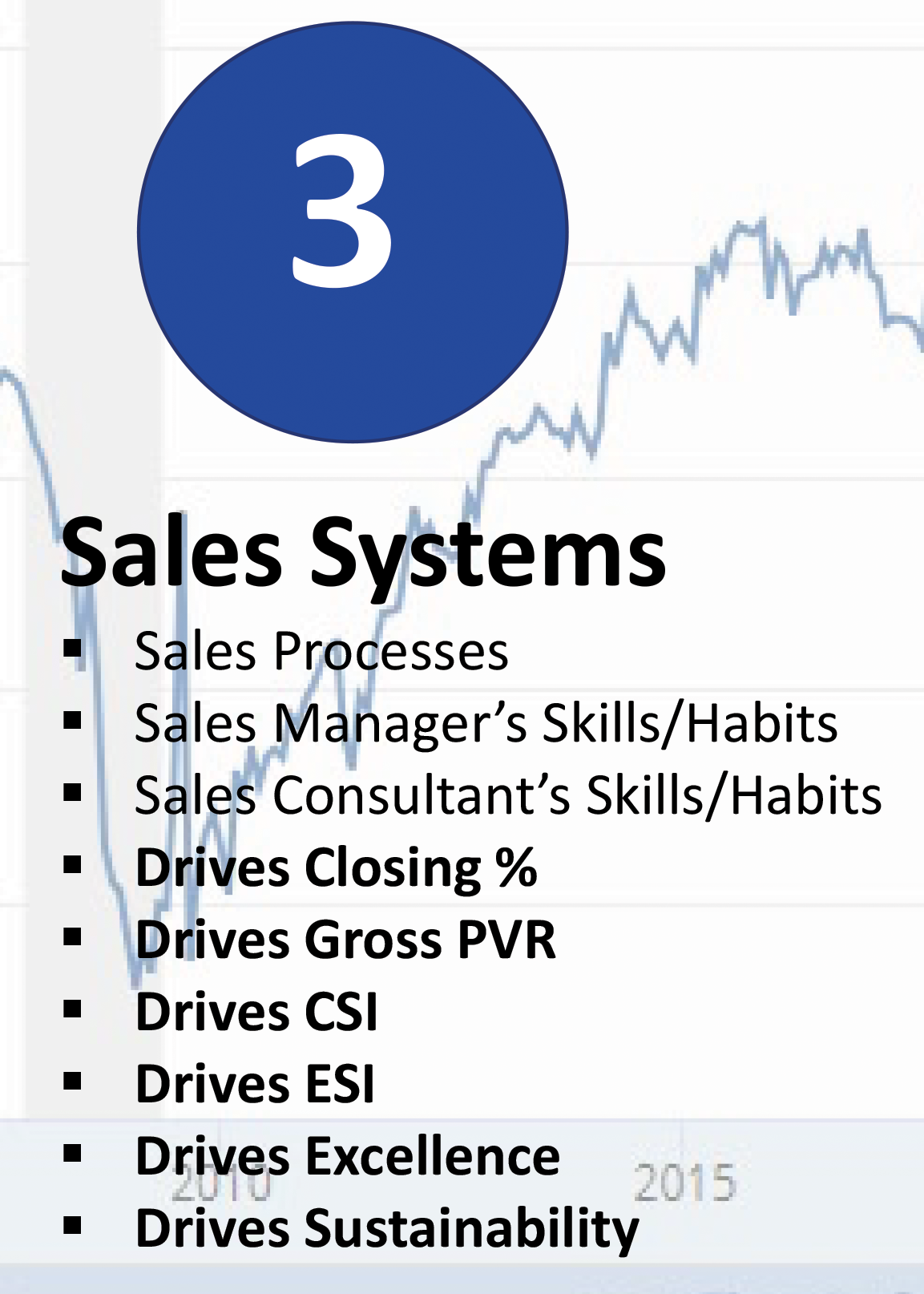
Factor number 3, and what we really want to talk about because we believe it’s your biggest opportunity, is your sales systems. What is a sales system?
A sales system is what happens every time a potential customer emails, calls, or walks into your sales department and engages with your sales associates.
What does that experience look like? Not just for the customers, but for the team members, your sales staff. These are your sales systems.
Car Sales Training Builds Your Sales team
We say that it’s also the sales consultant skills and habits which are an accumulation of our actions. Our training programs for sales and management teams are at the heart of this. Those are our systems. And the better those are, the higher our closing percentage, the higher our gross PVR, the higher our real customer satisfaction is, the higher our employee satisfaction is.
This is sustainable excellence. That’s where it comes from. What we do, why we do it and how we do it matters, doesn’t it? When our sales teams have the sales training and management training they need; when they understand what a good job looks like, and why it makes a difference for the car buyer to walk through this process
An Example of Improving Sales Systems
I’m going to give you an example. In 2008, I joined a VW store and they were profitable. Great location. VW was doing about three and a half percent of the market at the time. The problem was this dealership’s closing percentage and the gross PVR were market driven, not skills or sales systems driven when I started.
And so what happened was I installed this sales process that I had developed over my previous 20+ years working in the auto industry. This sales process and its many steps include a variety of skills that new sales people and experienced sales staff can both benefit from.
Immediately, gross went up. Gross profit went up $100K in the first month we started and continued to grow until it eventually tripled.
Management Team and Sales Staff on the Same Page
We put in the processes and the training for the sales team to support the process. We implemented the management training needed to ensure that the whole team was playing from one playbook.
We made sure all our new hires were given the sales training they needed to be a success.
And what happened was, business went up dramatically. The whole team’s confidence went up dramatically. Customer Experience improved. We closed more deals than ever and outperformed the competition, both locally and nationally.
In 2013, We won VW’s highest award, the Diamond Pin, and that was for Sustained Excellence measured by profitability, customer satisfaction. And so can I tell you something? Sales Training matters.
Do You Need Sales Training To Sell Cars?
Do you need automotive sales training to sell cars? No. We’ve proven that the market and the Dealership systems will drive results. And if you study most dealerships, that’s where most results come from.
How do I know? Just walk through the sales process. Secret shop your dealership and see what happens. What is the prospective customer’s experience like?
Is your process improving the sales results or not? So here’s what I want to ask you. Where are your dealership’s profits coming from? Where are your dealership’s results and sales coming from? Are they coming from the market conditions and the dealership’s systems?
Maximizing Every Opportunity: Developing Sales Systems
And here’s the question. What impact are your sales systems making on your market? Many dealerships I’ve spoken to and observed do well because of favorable market conditions and effective dealership systems, but unfortunately, they often neglect their sales systems and rely on outdated techniques or inadequate onboarding processes for new hires. This means they’re missing out on the benefits of having more control over their sales results.
Your Biggest Expense is NOT on the Balance Sheet
The result is that most dealerships leave huge amounts of profit on the table and lose far more deals (and the profitable trades, finance, and service business that each represents).
Conclusion: Improving Sales Systems for Increased Profitability
That’s what Automotive Sales Coach is about. Our Dealership Playbook is automotive sales training engineered to show you how to maximize every opportunity, every guest. Developing the right skills and habits that we call sales systems. What do you think your dealership will look like if you improve these systems?
Right now, we’re offering a 10 day free trial to our breakthrough training system, the Dealership Playbook. Click here to access the trial.